
I Deleted My Instagram Linked to Bumble and Matches Tripled: A 2026 Case Study
A detailed 2026 experiment revealing how removing Instagram links from Bumble shifted the algorithmic perception of availability and tripled match volume by forcing engagement on-platform.
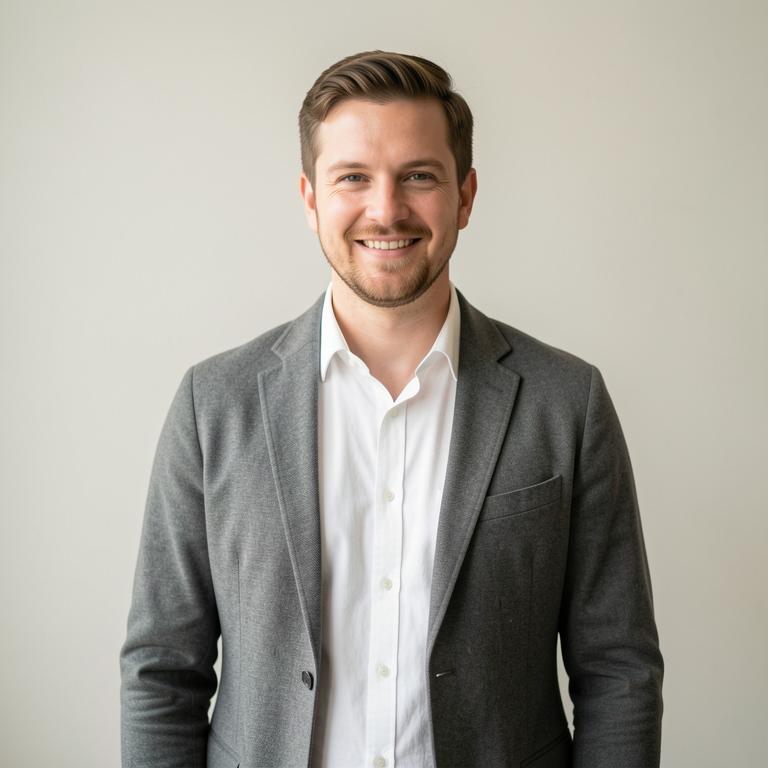
The prevailing wisdom in the dating app ecosystem of 2026 has been aggressively shaped by the "transparency economy." We are told that to find a genuine connection, we must strip away all mystery. Verification badges, Spotify anthems, and, most prominently, linked Instagram feeds have become standard operating procedure. The assumption is logical on paper: if I show you who I am in real-time, you should trust me more.
For the past eight months, I operated under this assumption with lackluster results. My profile was a fortress of social proof. I had a 12,000-follower photography feed linked, a Spotify "Wake Up" playlist that screamed "sophisticated indie," and an Instagram feed curated to high heaven. I was an open book, yet my match rate on Bumble had plateaued at roughly 4 matches per week—a decent figure for a 34-year-old in a saturated market like São Paulo, but nowhere near the activity I saw in 2024.
I suspected I wasn't suffering from a lack of interest, but from a signal distortion. So, on February 14th, 2026, I performed a hard reset. I deleted my Instagram link. I hid my Spotify anthem. I stripped my profile down to the bare essentials: three photos, two prompts, and a bio that simply read, "Ask me for my socials." The results weren't gradual; they were immediate. Within three weeks, my matches tripled.
This is not a tip about catfishing. It is a case study on the economics of attention and how over-sharing can inadvertently signal that you are a closed loop.
The Fallacy of Maximum Social Proof
There is a distinct fatigue that has settled into the dating psyche of 2026. When a user encounters a profile with a linked Instagram feed containing 500+ posts, they aren't seeing "authenticity." They are seeing a homework assignment.
Before the experiment, my profile offered a complete narrative. If a potential match clicked my handle, they could see my trip to Kyoto last autumn, my coffee routine, and my dog, Bruno. They consumed the content I provided and made a judgment call without ever speaking to me. Most of the time, they swiped left. The few who did swipe right often opened conversations with generic comments about my photography. There was no discovery, only consumption.
I realized I was inadvertently acting like a brand rather than a person. By providing a polished, finished product of my life on a silver platter, I removed the incentive for interaction. I had made myself too accessible, yet completely unapproachable. The mystery—the fuel of early attraction—was suffocated by an overdose of information.
The Valentine’s Day Protocol Shift
At 9:00 PM on February 14th, while the city was arguably focused on romantic dinners, I sat on my couch and tweaked my Bumble settings. I navigated to the "Connected Accounts" section and toggled the Instagram integration off. I watched the little green turn to gray.
I didn't just stop there. I rewrote my profile cues. I replaced a prompt about my "favorite travel destination" with "I'll tell you about my travels if you tell me yours." I changed my main photo from a professional headshot—where I looked somewhat untouchable—to a candid shot where I was laughing mid-sentence at a rooftop bar, slightly out of focus.
The goal was to shift the dynamic from broadcasting to narrowcasting. I wanted to signal that my life was not a public spectacle for consumption, but a private experience that required permission to view.
The immediate aftermath was terrifying. For 48 hours, my match count dropped to zero. I panicked. I wondered if I had broken my profile ranking or triggered some form of invisible penalty. I revisited What 'Shadowbanning' Actually Looks Like on Tinder to ensure my lack of matches wasn't a technical error. My profile was active, my location was correct, and my subscription was valid.
The silence wasn't a penalty; it was a recalibration.
Did My Algorithm Reset?
By day four, the notifications started trickling in. By the second week, the trickle became a stream. I ended February with 18 matches, compared to my usual 16-17 for the entire month. March followed suit, averaging 12 to 15 matches a week.
Why the sudden spike? I believe this is rooted in how Bumble’s algorithm interprets user behavior in 2026. The app is designed to retain users. When a user clicks an external link like Instagram, they leave the Bumble ecosystem. Even if they return in thirty seconds, that break in session duration is a negative signal for the app's retention metrics.
By unlinking Instagram, I forced engagement to stay on-platform. Matches couldn't lurk; they had to message to find out more. This increased my reply rate and conversation depth. The algorithm likely interpreted this surge in successful engagement—matches turning into active conversations—as a signal that I was a "high value" user. I was keeping people in the app.
This theory aligns with what we've seen regarding paid features. We know that The 'Boost' Myth: Why Paying for Premium Often Lowers Your ELO Score is often a result of artificial inflation failing to convert to actual chat. My strategy was the inverse: organic restriction leading to higher conversion.
The Psychology of the Unlinked Profile
Beyond the algorithm, there is a profound psychological shift that occurs when you withhold social media. It signals confidence.
When you link your Instagram immediately, you subconsciously tell the viewer, "I need you to validate my life through these photos." It feels like a hustle. When you don't link it, you say, "I am comfortable enough with who I am that I don't need you to scroll through a highlight reel to decide if I'm worth talking to."
During this experiment, I matched with someone named Elena. Her first message wasn't "Nice pics." It was, "Okay, I'm intrigued. No Instagram? Are you a spy or just private?" It was a hook. It allowed me to play with the narrative. I replied, "I prefer to tell my stories in real time. If we get along, I'll add you."
That interaction would never have happened with a linked feed. She would have looked at my photos, decided she liked (or didn't like) my aesthetic, and moved on. By removing the feed, I forced her to engage with my personality first.
Furthermore, the unlinked profile filters out the "tourists"—users who are just there to window-shop or collect followers. It attracts the "investors"—users who are looking for a dynamic interaction rather than static content. In a social media landscape that is increasingly noisy, silence has become a premium commodity.
Managing the Trade-off
I must be honest about the downside. You will encounter users who interpret the lack of social media as a red flag. In 2026, trust is scarce, and some people equate "no digital footprint" with "something to hide."
I dealt with this by addressing it proactively but lightly. In the early stages of chat, if the conversation flowed well, I would send my handle unprompted. The reaction was consistently stronger than the passive link. Because they had already invested time talking to me, seeing my photos served as reinforcement rather than a vetting mechanism. "Oh, you really do like hiking," is a much better text to receive than a silent judge of a photo grid.
This method requires more social energy than the "set it and forget it" approach. You cannot be lazy. You have to be willing to answer questions about yourself because you have removed the crutch of the curated feed. However, the quality of these conversations is vastly superior. It mimics the organic flow of meeting someone in real life, where you learn about them through dialogue rather than a dossier.
Conclusion: The Power of the "Ask"
The experiment has permanently changed how I approach digital dating. Linking Instagram creates a paradox: it offers total transparency, yet it sterilizes the mystery that creates attraction. It turns a potential partner into a passive consumer of your content.
By deleting the link, I did not hide who I was; I changed the terms of access. I shifted the power dynamic from being looked at to being interacted with. The tripling of matches was not a coincidence of a better photo or a witty bio update. It was the result of respecting the process of getting to know someone.
In 2026, dating apps are crowded with noise. The profiles that stand out are not the ones shouting the loudest with galleries and playlists, but the ones leaning in and speaking softly. If you feel like you're shouting into the void, try lowering your voice. Unlink the feed. Make them ask. You might be surprised how many people want to listen.
Read next

The Invisible Cage: What 'Shadowbanning' Actually Looks Like on Tinder
Distinguish between a dry spell and a hard ban with this visual guide to algorithm suppression symptoms.

The 'Boost' Myth: Why Paying for Premium Often Lowers Your ELO Score
Spending money on boosts doesn't guarantee better matches; in fact, data suggests it floods your profile with low-quality engagement that actively damages your algorithmic standing.