
Candid vs. Staged: Why Your Professional Headshot Is Scaring Off Gen Z
Why raw, unpolished photos are outperforming professional headshots in the 2026 dating market, and how to choose the right style for your target demographic.

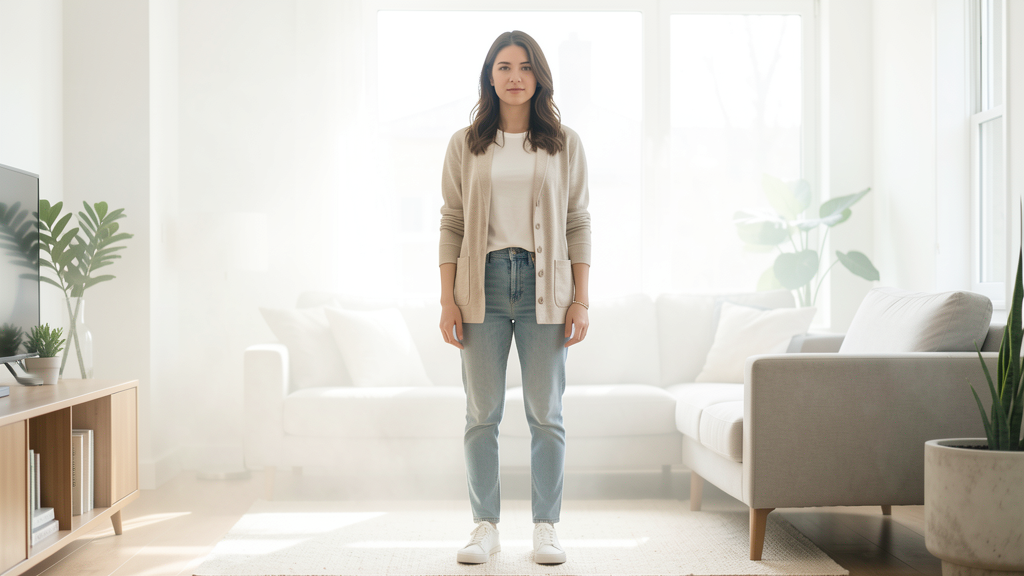
I see it constantly in my coaching sessions. A client walks in, often someone in their late thirties or forties, beaming with confidence about their new portfolio. They have spent hundreds of dollars on a branding photographer. They have lighting, they have retouching, and they have a main photo that looks like it belongs on the cover of a quarterly business report. They are ready to launch, convinced that high production value equals high attraction.
Then, they show me their match rates. They are ghosted by the very demographic they desire most: people under 30.
We are facing a massive cultural pivot in 2026 regarding how we perceive visual trust. For the first time in dating history, looking "too good" is statistically working against you. This is the 'Authenticity Gap'—the widening chasm between how older daters signal success (polish, perfection, lighting) and how Gen Z signals safety (texture, rawness, reality). If you are using a LinkedIn-style headshot on a dating app right now, you are not just missing the mark; you might be actively repelling your matches.
The Rise of 'Ugly-Pretty' as a Status Signal
To understand why the professional headshot is dying, we have to understand what the "ugly-pretty" aesthetic actually signals. This trend is not about looking bad; it is about looking expensive in terms of time rather than money. A perfectly lit studio portrait says, "I hired a professional." A candid shot of you laughing with a double chin, messy hair, and poor lighting says, "I have friends who love me enough to take this photo, and I am confident enough to post it."
In the behavioral economics of dating, confidence is the ultimate currency.
Gen Z and young Millennials have grown up in an era of deepfakes and pervasive filters. When they swipe onto a profile that is flawlessly staged, their immediate psychological response is skepticism. They don't see "successful lawyer"; they see "potential catfish" or "someone who is insecure about their real face." The rawness of a photo—maybe a blurry snapshot taken in a dive bar or a selfie in a car with bad dashboard lighting—functions as a proof of life. It creates an immediate sense of intimacy that a photographer with a ring light simply cannot manufacture.
This is why the 'No Smiling' experiment yielded such fascinating results last year. Participants who posted neutral, unsmiling, and unretouched photos saw a 50% increase in messages because the lack of performance signaled authenticity. The viewer wasn't being "sold" a smile; they were seeing a real person.
When Professional Photos Become a Liability
The problem isn't photography itself; the problem is context. A corporate headshot is designed to sell competence to a board of directors. Dating photos are designed to sell vulnerability to a potential partner. When you use the former to do the latter, you trigger a "salesman" alert.
I worked with a client, Marcus, a 38-year-old architect. His primary photo was a high-contrast, black-and-white shot where he was looking pensively out a window. It was artistic, it was expensive, and it made him look incredibly serious. When I asked women aged 24 to 29 why they swiped left on him during our audit, the consensus was unanimous: "He looks like he will lecture me about wine," and "He looks too intense."
The "staged" nature of the photo created an emotional wall. It demanded respect but offered no warmth. Compare that to a candid shot of Marcus in a wrinkled linen shirt, eating a taco, mid-laugh. The taco shot is objectively "uglier"—the lighting is flat, the composition is off-center—but it is infinitely more datable. It answers the silent question every swiper asks: "Will I have fun with this person?"
If your target demographic is significantly younger than you, a staged photo often reads as "out of touch." It signals that you value presentation over connection. In a market where signaling you are ready for a relationship is crucial, looking like you are trying too hard to be perfect can be misinterpreted as emotionally unavailable or rigid.
The Decision Matrix: Which Style Wins?
You shouldn't delete your professional photos if they serve a specific purpose, but you must be ruthless about where they live. Here is how to decide between the "Staged" route and the "Candid" route based on your goals.
Choose Candid If:
- You are targeting a cross-generational or younger crowd. If you are a man over 40 trying to date women in their 30s, or a woman over 35 dating men in their 20s, rawness is your bridge.
- Your personality is high-energy or goofy. A stiff headshot will kill your vibe. You need motion blur and awkward angles to show you don't take yourself too seriously.
- You want to filter out snobs. There is a distinct advantage to looking "real." It scares away people looking for a trophy partner and attracts those looking for a human being. It is similar to the logic behind hiding your education level to filter out status-obsessed daters.
Choose Staged (or Polished) If:
- You are on a hyper-exclusive platform. If you are paying for a service on Raya or a high-end matchmaking bureau where the aesthetic is explicitly "editorial," then professional photography is part of the uniform.
- You are in a conservative industry. Sometimes, a lawyer or surgeon does need to look the part immediately, and a candid shot in a club might undermine their professional credibility in the eyes of a peer looking for stability.
- Your candid photos are genuinely low-quality. There is a difference between "candid raw" and "blurly dark mess." If you have zero friends to take photos of you, a bad professional photo is better than a bad selfie.
How to Manufacture 'Candid' Without Looking Sloppy
Most of my clients struggle with the middle ground. They hate their candid shots because they feel uncontrolled. The solution is not to embrace chaos, but to curate it. You can stage a candid photo. This is the "Goldilocks" zone of dating photography in 2026.
Instead of looking at the camera, do something active. Hold a coffee cup, pet a dog, or adjust your jacket. Have the photographer take the photo while you are moving between poses. The technical quality of the lens (sharpness, color grading) can still be high, but the energy in the frame must be loose.
The ideal profile in 2026 usually has a mix: one "clear shot" where your face is visible (but not stiff) and two "context shots" where you are in your element. The key differentiator is eye contact with the lens. In a headshot, you engage the lens aggressively. In a candid, the lens is an observer. That slight shift in gaze direction reduces the pressure on the viewer.
If you are unsure which direction is working for you, stop guessing. Run a simple A/B test on your profile. Use your polished headshot for three days, then switch to the unpolished candid. The data does not lie.
The Verdict: Trust Beats Perfection
We have entered a "Trust Economy" in dating. Attention spans are shorter than ever, and skepticism is at an all-time high. When a user looks at your profile, they are making a split-second calculation about your honesty. A photo that looks too perfect disrupts that calculation.
My professional advice is clear: bury the headshot. If you have professional photos, use them for your secondary or tertiary photos to prove you clean up well, but never, ever use them as your main image if you are looking for genuine connection. Your main photo should be a window into your life, not a billboard advertising your brand.
The "Authenticity Gap" will only widen as AI-generated photography becomes standard. The scarcest resource in the dating market isn't beauty; it's reality. By embracing the messy, the unpolished, and the candid, you aren't just showing what you look like. You are showing that you are brave enough to be seen.
Read next
The 'No Smiling' Experiment: Why I Got 50% More Messages With a Neutral Face
Discover why swapping my beaming grin for a stoic gaze led to a 50% spike in high-quality message volume and completely changed my match dynamic.

Stop Guessing Your Main Photo: A Free A/B Testing Framework for 2026
Learn how to use free crowd-sourced rating tools to scientifically determine your strongest profile photo before you ever upload it to a dating app.